
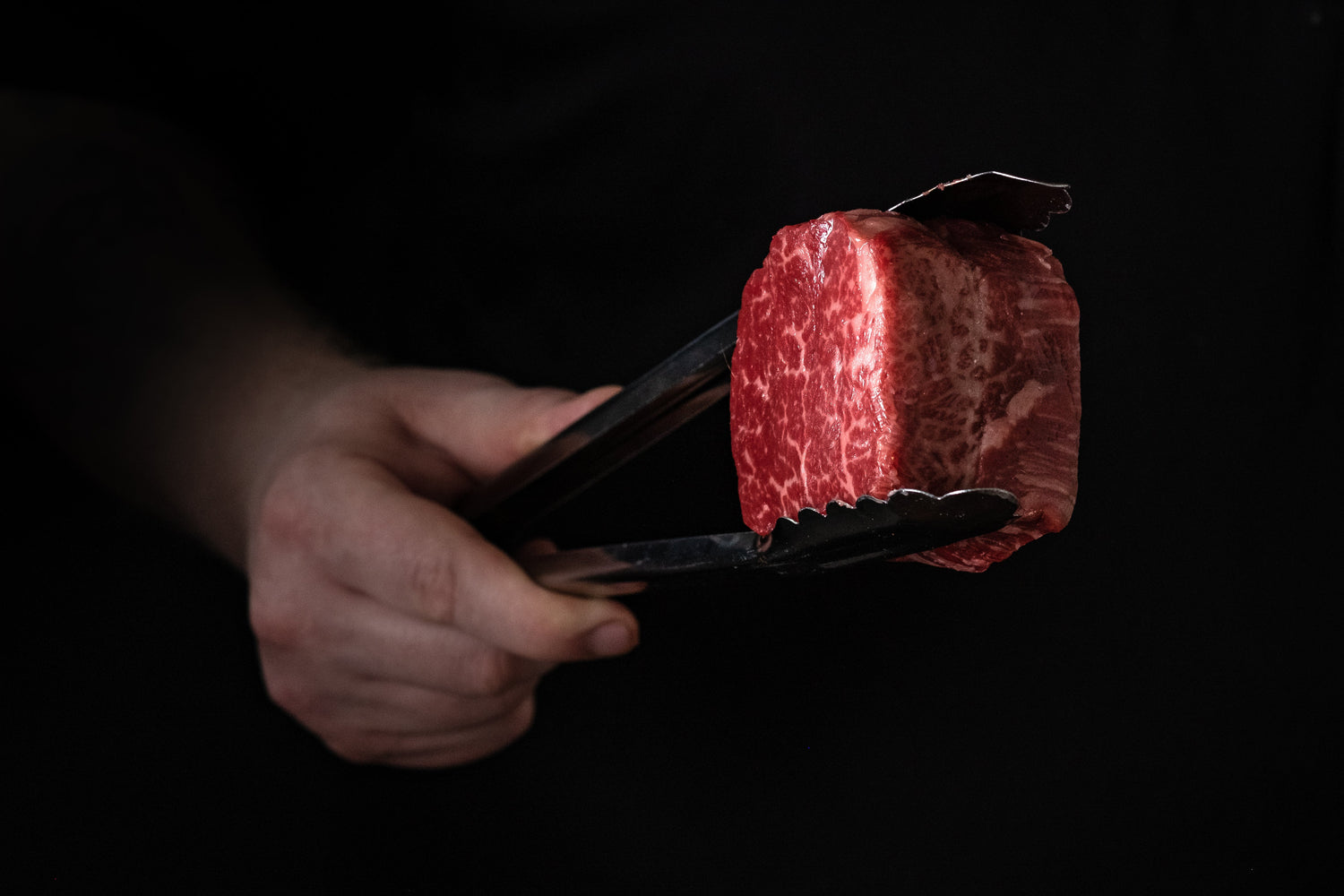
Filet Mignon is considered particularly noble and tender – and is accordingly expensive. In fact, it comes from the inner loin muscle, an area that is hardly used and is therefore particularly fine-fibered. However, it contains little intramuscular fat (marbling) and can therefore be less flavorful than more marbled cuts.
Cuts like Skirt Steak, Flank Steak, or Hanging Tender often offer a more intense flavor due to their more pronounced marbling and stronger muscle fiber structure. Fat is a crucial flavor carrier; it melts during cooking, spreads throughout the tissue, and provides juiciness and mouthfeel. If such a cut is correctly sliced against the grain, it can be exceptionally tender – often at a significantly lower price.
Historically, filet was not always the most prestigious cut. In many traditional European cuisines, more heavily used pieces were long considered more flavorful because they developed a more intense aroma. It was only in the 19th and early 20th centuries – especially with the rise of fine dining and later the international steakhouse culture – that extreme tenderness became a luxury feature. The French term "Filet Mignon" ("tender, fine piece") further contributed to its image.
In the 20th century, beef tenderloin established itself as a symbol of exclusivity, also because it is only available in limited quantities per animal. A cattle only provides two tenderloin strands (Chateaubriand) – this natural scarcity reinforced its perception as a premium product. Simultaneously, many other muscle parts long faded into the background or were processed into braised dishes.
Only in recent decades has there been a rethinking. With growing interest in "nose-to-tail" philosophy, sustainable utilization, and artisanal butchery, so-called "second cuts" or "butcher's cuts" have come into focus. Skirt Steak and Hanging Tender, for example, were systematically established as independent premium cuts only through modern butchering techniques. Previously, they often ended up as ground meat.
Today we know: "The best cut" is not an objective category, but a matter of priorities. Those seeking maximum tenderness opt for the filet. Those who appreciate intense beef flavor, juiciness, and value for money often find more exciting choices in more marbled cuts. Quality is not solely created by name – but by aging, origin, marbling, and artisanal preparation.


