
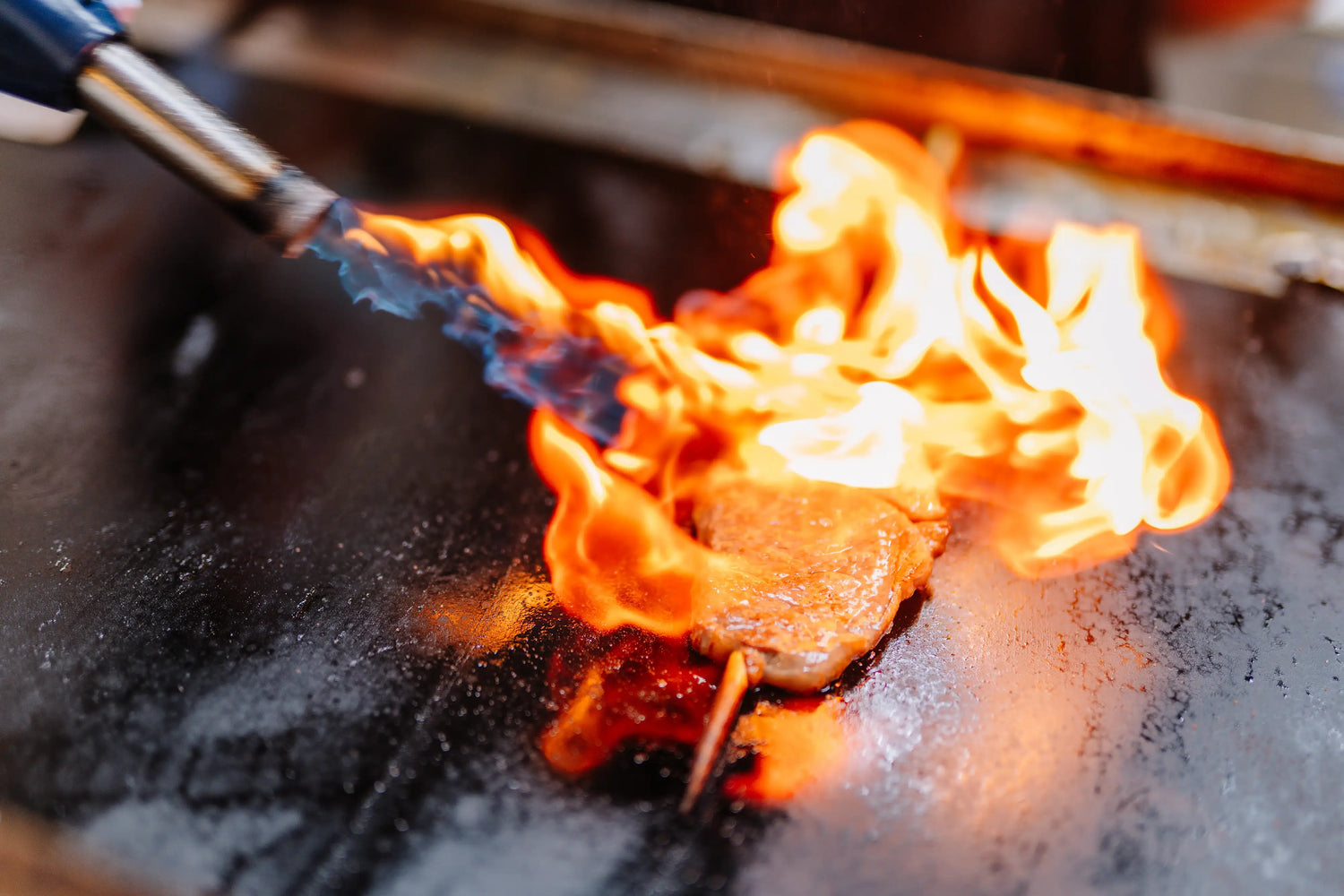
One of the most persistent misconceptions is that searing meat at high heat seals in its juices by forming an impermeable crust. In reality, meat doesn't have pores that can be sealed – it consists of muscle fibers interwoven with connective tissue. When heated, these fibers contract and squeeze out liquid – regardless of whether the meat was seared beforehand or not.
Originating in the 19th century: The theory of Justus von Liebig
The origin of this myth can be traced back to the 19th century. The German chemist Justus von Liebig theorized that searing meat at high temperatures created a protective layer that retained the juices. This assumption influenced generations of chefs and cookbooks. However, precise measuring methods for accurately determining cooking losses were lacking at the time. Only modern food analyses have shown that seared meat does not lose less liquid than slow-cooked meat.
The Maillard reaction: taste instead of "sealing"
While searing is crucial for the formation of an aromatic crust through the so-called Maillard reaction, described in the early 20th century by the French chemist Louis-Camille Maillard , this reaction primarily affects the flavor, not the juiciness. In this process, amino acids and sugars react under heat to form hundreds of aromatic compounds – responsible for roasted aromas, browning, and the typical steak crust.
Scientific findings: High heat can even cause fluid loss.
Interestingly, experiments as early as the 20th century showed that seared meat sometimes even loses slightly more weight because high heat triggers faster muscle contractions. Juiciness, however, depends more on factors such as meat quality, marbling, core temperature, and resting time.
Reverse Searing: Succulence through temperature control
On the contrary: those who initially cook the steak at a low temperature and only sear it at high heat at the end – a method known as reverse searing – often achieve a juicier and more evenly cooked result. This technique is not a modern invention, but rather a further development of classic low-temperature methods that have long been used in professional kitchens. The high heat at the end serves solely to develop flavor – not to "seal" the meat.
Conclusion: Crust brings aroma – precision brings juiciness
Today it is considered certain: Searing creates flavor, but not a waterproof protective layer. The juiciness of a steak is not sealed in, but rather arises from precise temperature control.


