Cooked by Kauf Dein Steak customers
Braised Beef Cheeks with Rich Homemade Beef Stock
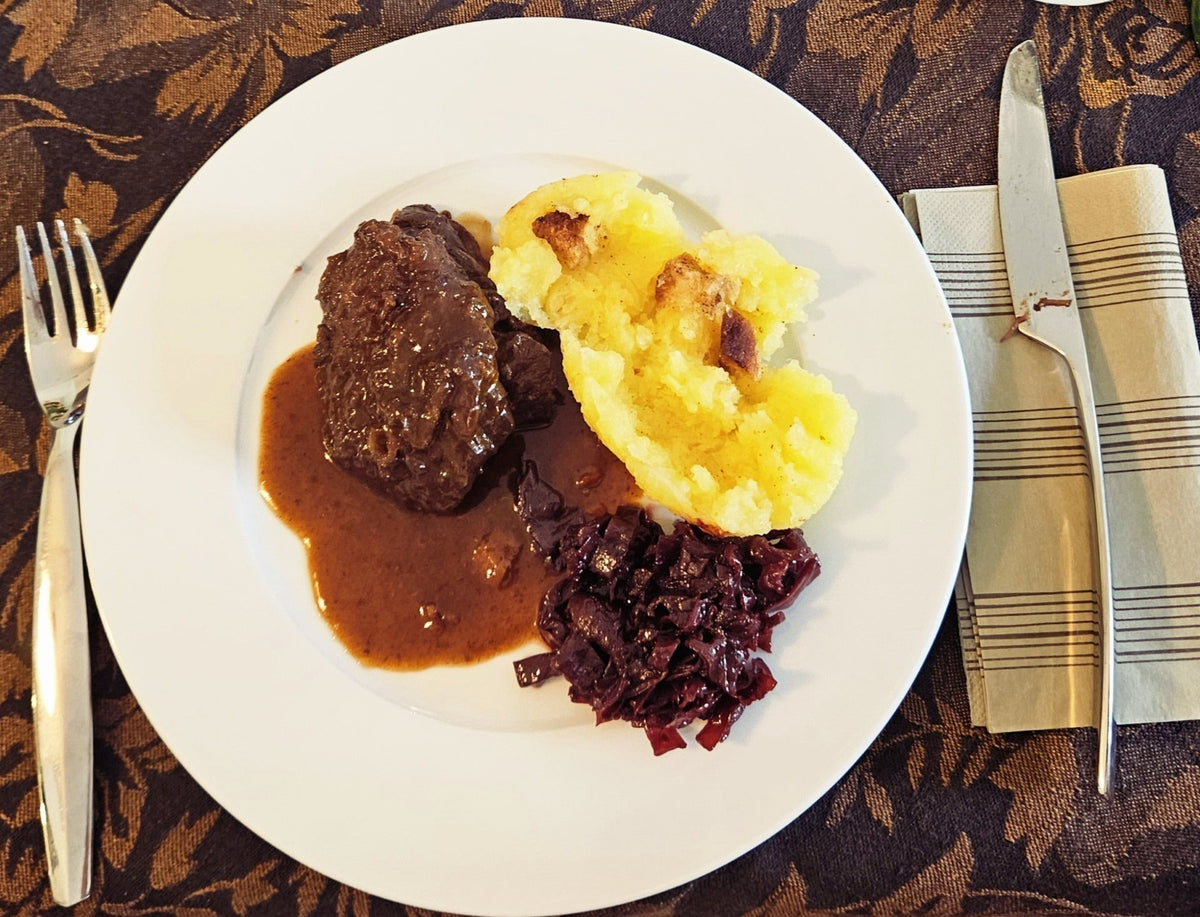
Great products are one thing. What you create with them in your own kitchen is something we find just as exciting. That is why we are sharing recipes from our customers using products from Kauf Dein Steak. First up is Lulu with braised beef cheeks , rich homemade beef stock, Thuringian potato dumplings and red cabbage.
For this dish, Lulu deliberately relies on classic home cooking, plenty of time and high quality ingredients. Several Kauf Dein Steak products are used in the recipe. Our beef bones are first turned into a rich stock, which later forms the base of the sauce for the beef cheeks .

Rich Homemade Beef Stock
The homemade beef stock forms the base of the sauce for the beef cheeks and can also be used for many other braised dishes.
Ingredients
- 1 kg beef bones from Kauf Dein Steak
- 1 bunch soup vegetables, such as carrot, leek and celeriac
- 2 garlic cloves
- 2 shallots
- 1 bay leaf
- Salt
- Lovage
- Allspice
- Thyme
- Umami seasoning to taste
- A little beef fat rendered from the bones
Method
-
Roast the beef bones.
Pat the bones dry, season with salt and roast them in an air fryer at around 200°C until well browned on all sides. The exact cooking time depends on the desired level of browning. Alternatively, roast the bones on a baking tray in the oven. -
Roast the shallots.
Cut the unpeeled shallots in half lengthways and add them to the bones about halfway through the roasting time. Allow the shallots to brown well too. -
Start the stock.
Place the bones, browned shallots and bay leaf in the slow cooker. Add enough water to cover the bones . -
Save the beef fat.
The beef fat released during roasting can be collected separately and stored well covered in the refrigerator until needed. -
Cook slowly.
Heat the stock in the slow cooker according to the appliance manufacturer's instructions and then allow it to cook slowly using a suitable setting. Lulu likes to give her stock plenty of time and lets it cook for 24 to 48 hours. Alternatively, the stock can be cooked slowly in a suitable pot while maintaining sufficient heat throughout. -
Prepare the vegetables.
Clean and finely dice about half a bunch of soup vegetables. Brown them thoroughly in a good frying pan with a little beef fat. Deglaze the pan with a little water and add both the vegetables and the cooking juices to the stock. -
Add the seasoning.
Add the roughly crushed spices and garlic cloves. Cover and continue cooking. -
Strain the stock.
At the end of the cooking time, remove the bones . Any remaining marrow can be passed through a fine sieve and added back to the stock if desired. Strain the vegetables as well and press them lightly. -
Season and reduce.
Adjust the seasoning to taste. For an even more intense flavour, the stock can then be reduced further in an uncovered pot.
Lulu's tip: Try to open the slow cooker as little as possible during cooking. Each time the lid is removed, heat escapes and the cooking time may increase.
Once prepared, cool the finished stock promptly and store it well covered in the refrigerator. Larger quantities are best divided into smaller containers for faster cooling. Refrigerated leftovers should be used within two to three days or frozen in portions once cooled.
Braised Beef Cheeks
Serves approximately 5 to 6
Ingredients
- 3 packs of beef cheeks from Kauf Dein Steak
- 1/2 bunch soup vegetables
- 1 shallot
- 1 garlic clove
- Approx. 20 g beef fat or clarified butter
- Approx. 300 ml dry red wine
- Approx. 500 ml homemade beef stock
- Approx. 1 tbsp double concentrated tomato paste
- 1/2 mild chilli pepper
- 1/2 cup dried mushrooms
- 2 to 3 tbsp whipping cream
- Salt
- Pepper
- Umami seasoning to taste
- Harissa paste to taste
- A little sauce thickener if desired

Method
-
Prepare the meat.
Pat the beef cheeks dry and rub generously with coarse salt. Cover and leave them in the refrigerator for a few hours. Keep refrigerated until ready to cook. -
Brown the beef cheeks.
Heat a heavy titanium or cast iron pan thoroughly. Brown the beef cheeks well on all sides. Wait until the meat releases easily from the pan before turning it. Add a little beef fat if necessary. -
Transfer the meat to the slow cooker.
Place the browned beef cheeks directly into the prepared slow cooker. Leave the fat and browned cooking juices in the frying pan. -
Prepare the braising base.
Add the cleaned and diced soup vegetables to the pan and brown them thoroughly. Add the shallot, garlic and chilli pepper. -
Add tomato paste and red wine.
Add the tomato paste to the vegetables and cook briefly. Pour in about half of the red wine. Scrape the browned cooking juices from the bottom of the pan and allow everything to reduce for a few minutes. -
Add the stock and mushrooms.
Add the remaining red wine, about half of the beef stock and the dried mushrooms prepared according to the package instructions. Heat everything together and then add it to the beef cheeks in the slow cooker. -
Braise slowly.
Close the lid and cook the beef cheeks thoroughly using a suitable slow cooker setting and following the appliance manufacturer's instructions. Lulu allows approximately 8 hours for her preparation. The dish can also be braised slowly in a traditional casserole or Dutch oven over low heat. -
Check the meat.
Towards the end of the cooking time, check that the beef cheeks are fully cooked and pleasantly tender. Extend the cooking time if necessary. -
Finish the sauce.
Remove the meat from the slow cooker and strain the sauce. The vegetables and mushrooms can be pressed lightly and some of them returned to the sauce if desired. -
Season the sauce.
Add the whipping cream and season the sauce with salt, pepper, umami seasoning and harissa paste. Add more beef stock if a larger quantity of sauce is desired. Continue reducing the sauce until the desired intensity is reached. -
Return the beef cheeks to the sauce.
A little sauce thickener can be added if a thicker consistency is preferred. Return the beef cheeks to the sauce and heat thoroughly. Serve immediately.
Lulu's tip: The meat and sauce can easily be stored in individual portions. Cool any portions that are not needed immediately as quickly as possible, then refrigerate or freeze them.
Refrigerated leftovers should be eaten within two to three days. When reheating, make sure the dish is heated thoroughly throughout.
What Lulu Serves with It
Lulu serves her braised beef cheeks with Thuringian potato dumplings and her fruity red cabbage. She has now shared both side dish recipes with us as well.
+ The Story Behind Lulu's Recipe
Two guests, both well over 80 years old, were coming to visit Lulu after they had not seen each other for a long time. She wanted to serve them something special. Rather than choosing an unusual reinterpretation, she deliberately decided on tradition and high quality ingredients.
The beef cheeks from Kauf Dein Steak were therefore prepared as a classic braised beef dish. Lulu served them with Thuringian potato dumplings, which she remembers fondly from her childhood and youth, as well as red cabbage prepared according to her own recipe.
Kauf Dein Steak products play an important role throughout the dish. Alongside the beef cheeks , Lulu also uses beef bones to prepare a rich homemade stock. This stock then becomes the base of the sauce. She also renders the beef fat used in the recipe herself from the bones.
Lulu prefers to use her slow cooker for both the stock and the beef cheeks. The long cooking time allows the flavours of the meat, sauce and seasonings plenty of time to come together.
Her approach sums up the recipe perfectly: tradition meets high quality ingredients and plenty of time.
Lulu
Products Used in This Recipe
The stars of Lulu's recipe are our beef cheeks and beef bones . The bones form the base of a rich homemade beef stock, while beef cheeks are particularly well suited to long, slow braising.