
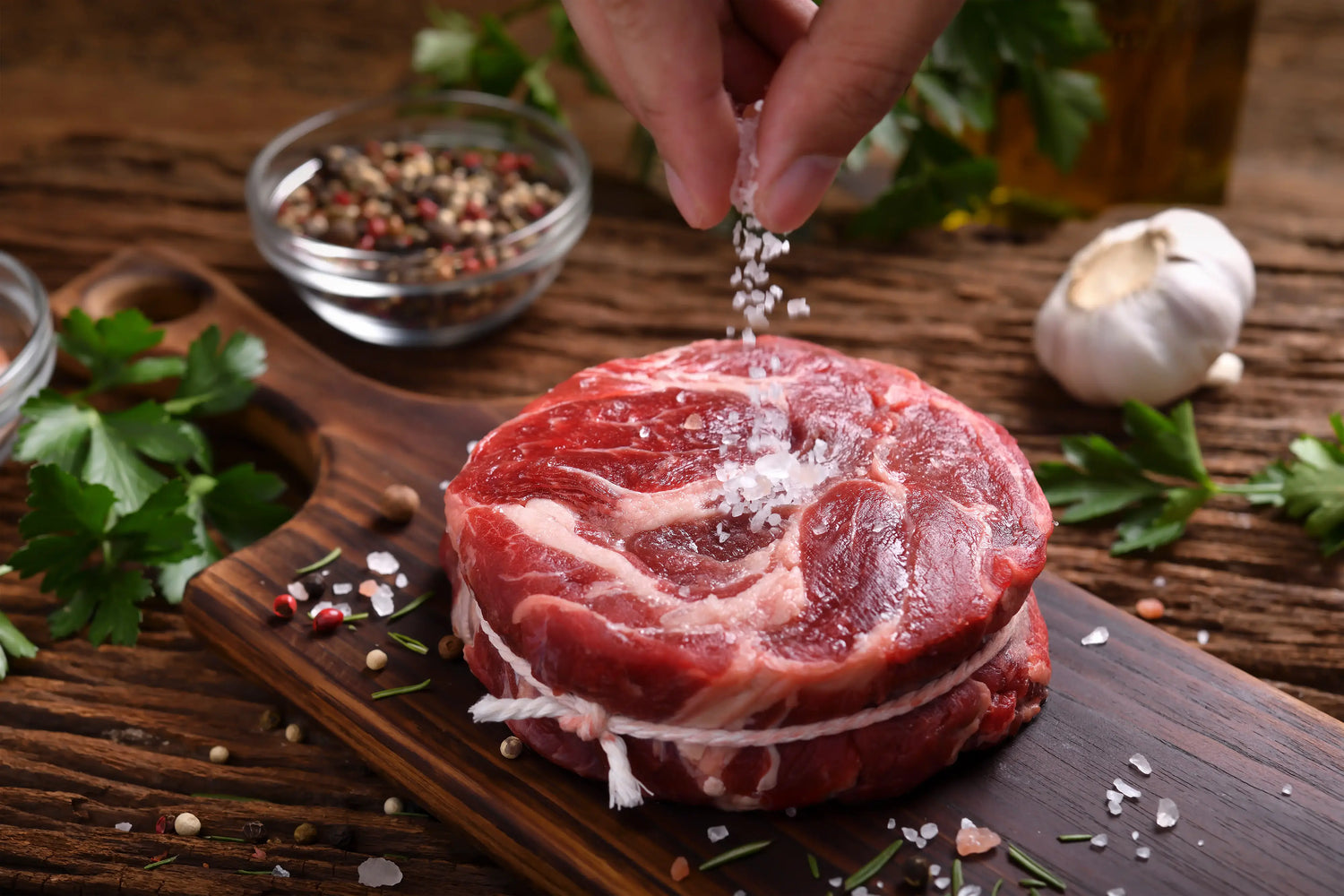
It is often feared that salt draws moisture out of meat, thereby drying it out. However, scientific findings show a different picture: If the steak is salted at least 40 minutes before cooking – or even overnight – the liquid that initially emerges is reabsorbed through osmosis and diffusion. The salt partially dissolves muscle proteins such as myosin, which allows the meat to retain water better.
The result is an evenly seasoned piece of meat with a drier surface, which promotes a particularly aromatic and crispy crust when seared. At the same time, the altered protein structure improves the juiciness inside.
The Science Behind Salting
The time factor is crucial: immediately after salting, liquid initially emerges. However, if the meat is given sufficient time, the salt distributes evenly throughout the tissue. The liquid that previously emerged is reabsorbed – but now seasoned and enriched with dissolved proteins.
This altered structure ensures better water retention and simultaneously supports the formation of an intense crust when frying.
A Look into the History of Salt
Historically, salting meat was never intended as a "dehydration method," but primarily served for preservation. As early as ancient Rome, meat was salted to preserve it – hence the word "salami" comes from the Latin sal. In times without refrigeration, salt was one of the most valuable commodities; entire trade routes such as the "Via Salaria" arose solely through the salt trade.
Interestingly, in traditional kitchens, meat was often seasoned or cured long before preparation. Deliberately salting briefly right before searing is more of a modern kitchen rule that became widespread in the 20th century – presumably from the observation that heavily salted, thin meat does indeed lose water during long storage. However, this does not apply to a fresh, thick steak with enough time for reabsorption.
Special Case: Dry-Aged Meat
Dry-aged meat, however, holds a special position. Due to the weeks-long dry aging process, the meat already loses a noticeable portion of its water content, while the flavors become highly concentrated. The physical effect of salt remains the same – here too, emerging liquid is reabsorbed – but dry-aged meat reacts more sensitively in terms of taste.
Due to the intense, nutty, and umami-rich aging flavors, a slightly smaller amount of salt is usually sufficient to maintain the balance. It's less about the risk of drying out and more about subtlety in seasoning, so that the characteristic aging flavor remains in the foreground.
Conclusion: Salt Early for More Flavor
Today, food chemistry and practice confirm alike: Properly dosed, early salting is not a mistake, but a deliberate tool for more flavor, better crust formation, and a juicy result.


