
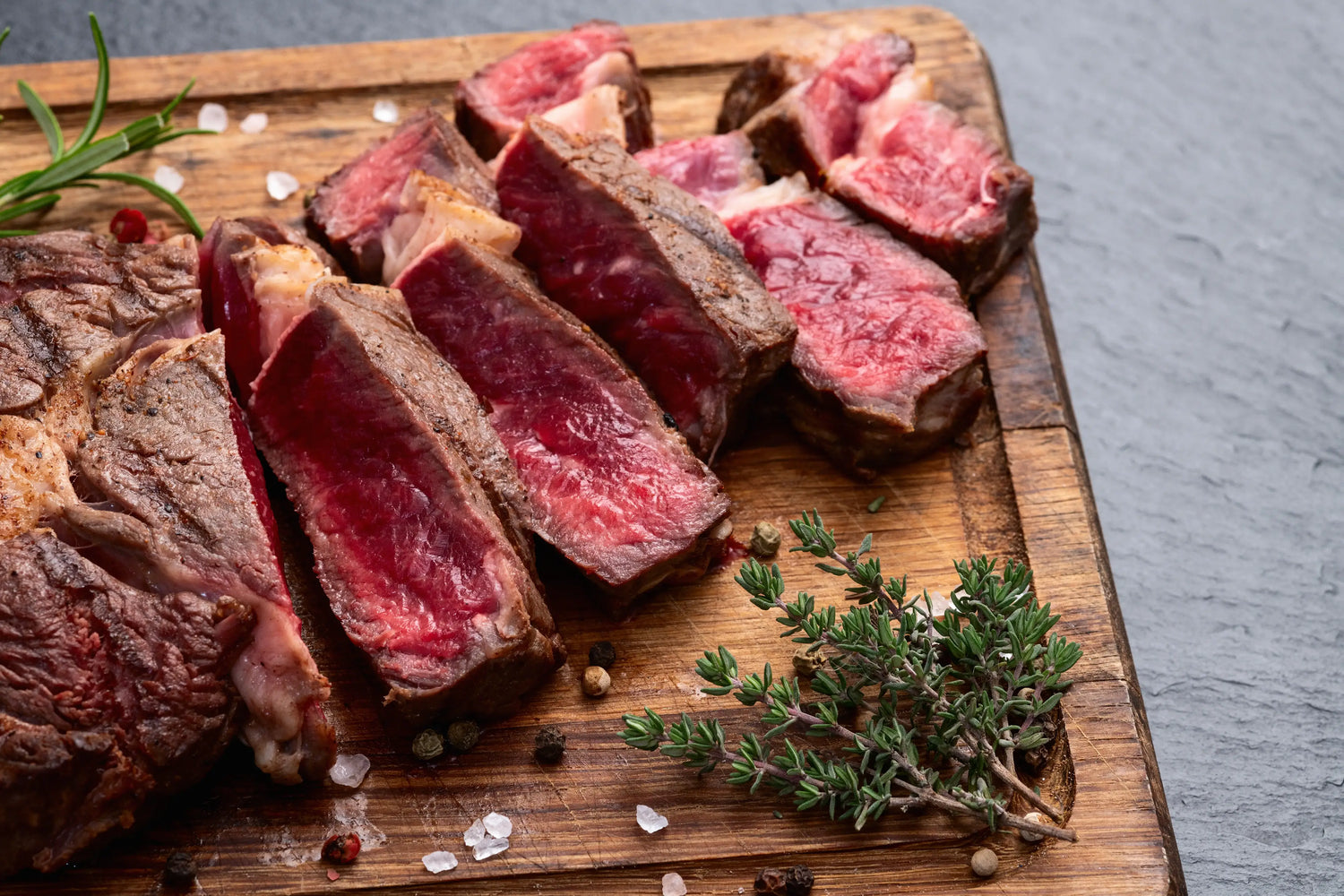
Out of fear of germs, meat is often overcooked. However, in a whole muscle cut like a steak, bacteria are usually on the surface, not inside. The high heat of searing – well over 150°C on the surface – reliably kills them. The interior of an intact steak, on the other hand, is almost germ-free, provided it has been processed hygienically.
A steak cooked to "rare" or "medium rare" is therefore safe for most healthy people, provided the surface has been sufficiently heated. Minced meat is more critical, as germs can be distributed throughout the product during mincing – which is why stricter cooking recommendations apply to burger patties.
Historical Reasons for Thorough Cooking
Historically, thorough cooking was less a matter of taste than a safety measure. Before the introduction of modern refrigeration technology and controlled slaughtering processes, the risk of microbial contamination was significantly higher. It was only with the development of reliable cold chains in the 19th century – particularly through technical innovations such as the artificial refrigeration developed by Carl von Linde – that it became possible to store meat hygienically for longer periods and to serve it pink.
Steakhouse Culture and Understanding of Quality
In parallel, the steakhouse culture developed in the 19th and early 20th centuries, for example in the USA, where "rare" and "medium rare" increasingly became a hallmark of quality. A pink core became a sign of tenderness, freshness, and artisanal precision – not of negligence. In classic French cuisine, "saignant" also became an established doneness level where the meat deliberately remains red in the interior.
Core Temperature Instead of Color Debate
Today, it's not just the color that matters, but the core temperature. A "rare" steak is usually around 48–52°C, "medium rare" at about 52–56°C. At these temperatures, some of the proteins coagulate, while enough meat juice remains bound – the result is tender and juicy. Only at significantly higher temperatures does the muscle structure contract strongly, releasing more liquid and making the meat appear drier.
Conclusion: Quality and Preparation are Crucial
Modern food hygiene therefore confirms: A pink steak is not a safety risk, but a matter of correct preparation and the quality of the raw product.


