Cooked by a Kauf Dein Steak customer
Beef Tongue with Madeira Sauce
Our customer Lulu has been cooking again, and this time our uncured beef tongue takes centre stage. Slowly cooked in a slow cooker, cut into generous slices and served with a homemade Madeira sauce, it becomes a classic dish full of flavour.
Another highlight is that the broth created while cooking the tongue is also used in the Madeira sauce, adding even more depth of flavour and bringing the individual elements of the dish together.
Slow Cooked Beef Tongue
Serves approximately 3 to 4
Ingredients
- 1 uncured beef tongue , approx. 1 kg raw weight
- 1 onion
- 1/2 bunch soup vegetables
- 1 bay leaf
- Allspice to taste
- Lovage to taste
- Thyme to taste
- Parsley to taste
- 2 to 3 tbsp salt
- Optional: a little sugar for seasoning
Method
- Prepare the beef tongue.
If using frozen beef tongue , allow it to thaw completely in the refrigerator first. Remove it from the packaging and pat it dry with kitchen paper. - Brown the onion.
Cut the unpeeled onion in half and place the cut sides in a hot frying pan until well browned. The roasted flavours will later add extra depth to the broth. - Place the tongue in the slow cooker.
Add the beef tongue to the slow cooker together with the browned onion, salt, bay leaf and allspice. Add enough cold water to completely cover the tongue. - Cook slowly.
Cook the beef tongue slowly using a suitable setting and following the appliance manufacturer's instructions. Lulu allows approximately 5 to 6 hours for her preparation. - Add the soup vegetables.
About 1 to 2 hours before the end of the cooking time, clean and roughly chop the soup vegetables and add them to the slow cooker. Season the broth to taste with lovage, thyme and parsley. A small amount of sugar can also be added if desired to round off the flavour. - Check the meat.
Towards the end of the cooking time, check whether the beef tongue is fully cooked and tender. A meat fork should slide into the tongue without much resistance. Extend the cooking time if necessary. - Remove the skin.
Remove the beef tongue from the broth and allow it to cool briefly until it is comfortable to handle. Carefully peel away the outer skin. - Store until serving.
If the beef tongue is not being used immediately, cool it promptly and store it well covered in the refrigerator. Reserve some of the cooking broth for the Madeira sauce.
Lulu's tip: Do not throw away the broth from cooking the tongue. It already contains plenty of flavour and later becomes an important part of the Madeira sauce.
Madeira Sauce
To accompany the slowly cooked beef tongue, Lulu prepares a rich sauce using roasted vegetables, red wine, Madeira and some of the broth from cooking the tongue.
Ingredients
- 1/2 bunch soup vegetables
- 1 to 2 tbsp tomato paste
- 2 tbsp clarified butter
- 250 ml dry red wine
- 100 ml Madeira
- 2 to 3 ladles of beef tongue broth
- 1 to 2 peppercorns
- A little coarse sea salt
Method
- Prepare the vegetables.
Clean the soup vegetables and cut them into small cubes. - Brown the vegetables.
Heat the clarified butter in a casserole or heavy pot. Add the diced vegetables and brown them thoroughly while stirring regularly until they develop a rich colour. - Add the tomato paste.
Add the tomato paste and roast it briefly with the vegetables. Take care not to let it burn. - Add pepper and red wine.
Add the peppercorns and gradually deglaze the sauce base with the dry red wine. Carefully loosen the browned cooking juices from the bottom of the pot. - Reduce the sauce.
Allow the mixture to reduce slowly over low heat. Add the Madeira and continue reducing. - Add the beef tongue broth.
Gradually stir in 2 to 3 ladles of the reserved broth. Leave the sauce uncovered and allow it to simmer gently until the desired intensity and consistency are reached. - Season to taste.
Taste the sauce at the end and add a little coarse sea salt if required. As the broth has already been seasoned, it is best to add any additional salt only at the end.
Serving the Beef Tongue
Cut the cooked beef tongue into generous slices approximately the width of a thumb. The slices can either be heated thoroughly in the Madeira sauce or lightly browned in a little butter first.
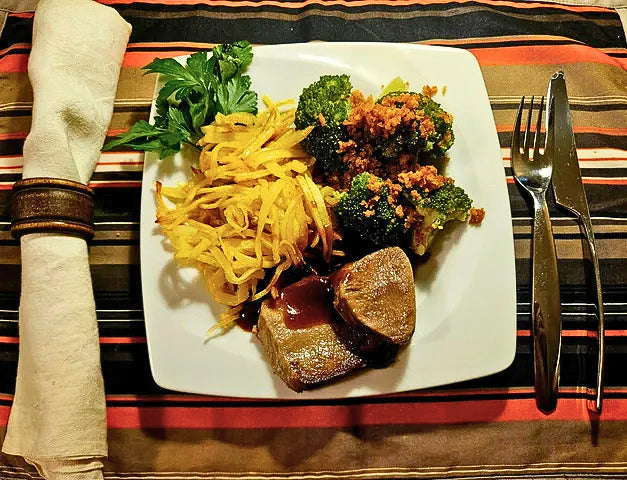
Serve the beef tongue together with the Madeira sauce and your preferred side dishes. Lulu serves hers, for example, with crispy potato straws and vegetables.
Side Dishes for Lulu's Beef Tongue
Lulu serves her beef tongue with Madeira sauce alongside different side dishes that add extra texture and a pleasant contrast to the dish. Crispy potato straws, broccoli with golden breadcrumbs or a delicate potato and mushroom flower all work particularly well.

+ Cooked by Lulu
For Lulu, the appeal of this dish lies in turning an uncured beef tongue and just a few classic ingredients into a flavourful meal. The slowly cooked tongue and the Madeira sauce are not prepared as completely separate components. Instead, the broth created during cooking brings the two together.
Lulu also prefers to be careful when seasoning and makes final adjustments only towards the end. She was so pleased with the result that this combination of beef tongue and Madeira sauce is unlikely to have appeared on her table for the last time.
Lulu

Products Used in This Recipe
At the heart of Lulu's recipe is our uncured beef tongue . Slow cooking makes it particularly suitable for classic dishes served with rich sauces, while the cooked meat can be prepared and served in a variety of ways.
Already Discovered?
Our beef tongue is also available as cured beef tongue or alternatively as cured veal tongue .
```