To ensure the highest quality and safety when handling raw meat, the process must begin with an unbroken cold chain from the moment of purchase. Fresh meat is highly perishable due to its high protein and water content, as microorganisms can multiply rapidly at temperatures above 5°C . Therefore, raw meat should be transported in insulated cooler bags or boxes with ice packs and placed in the refrigerator or freezer within 20 to 30 minutes of purchase.
When dealing with vacuum-packed meat, it is important to check the seal. If it is damaged, the meat should be removed from the packaging immediately and repackaged airtight before storage.
Proper storage in the refrigerator
For short-term storage, raw meat should be kept in the coldest part of the refrigerator, usually on the bottom glass shelf directly above the vegetable drawer. The ideal storage temperature is 4°C or below, although some experts recommend a range between 0°C and 2°C to slow bacterial growth as effectively as possible.
Meat should be stored in its original airtight packaging or in a leak-proof container to prevent meat juices from dripping onto other foods – especially products that are eaten raw, such as salads or cheese. When vacuum-packed meat is opened, a slight lactic acid odor may be noticeable. This is normal and should dissipate after about 30 minutes of exposure to air.
Shelf life of raw meat in the refrigerator
The shelf life in the refrigerator depends heavily on the surface area of the specific piece of meat. Ground meat is particularly perishable and should ideally be consumed within 8 to 24 hours.
Poultry, offal, and smaller cuts like goulash or stewing meat generally stay fresh for 1 to 2 days. Larger cuts such as steaks, roasts, or whole portions can be safely stored in the refrigerator for 3 to 5 days. If the meat is not used within this timeframe, it should be prepared for freezing while still fresh as soon as possible.
Preparation for long-term storage
For long-term storage, it is recommended to divide the meat into portion-sized quantities so that it freezes faster. Before packaging, any external fat should be removed, as it can become rancid in the freezer. Bone fragments should also be removed to prevent the packaging from being punctured.
Minced meat can be packed into freezer bags in portions of 500g to 1kg and then flattened with a rolling pin. The thin shape allows it to freeze faster and saves space. Some methods also recommend briefly washing the meat in salt water and then patting it dry to prevent ice from forming on the surface.
Proper freezing
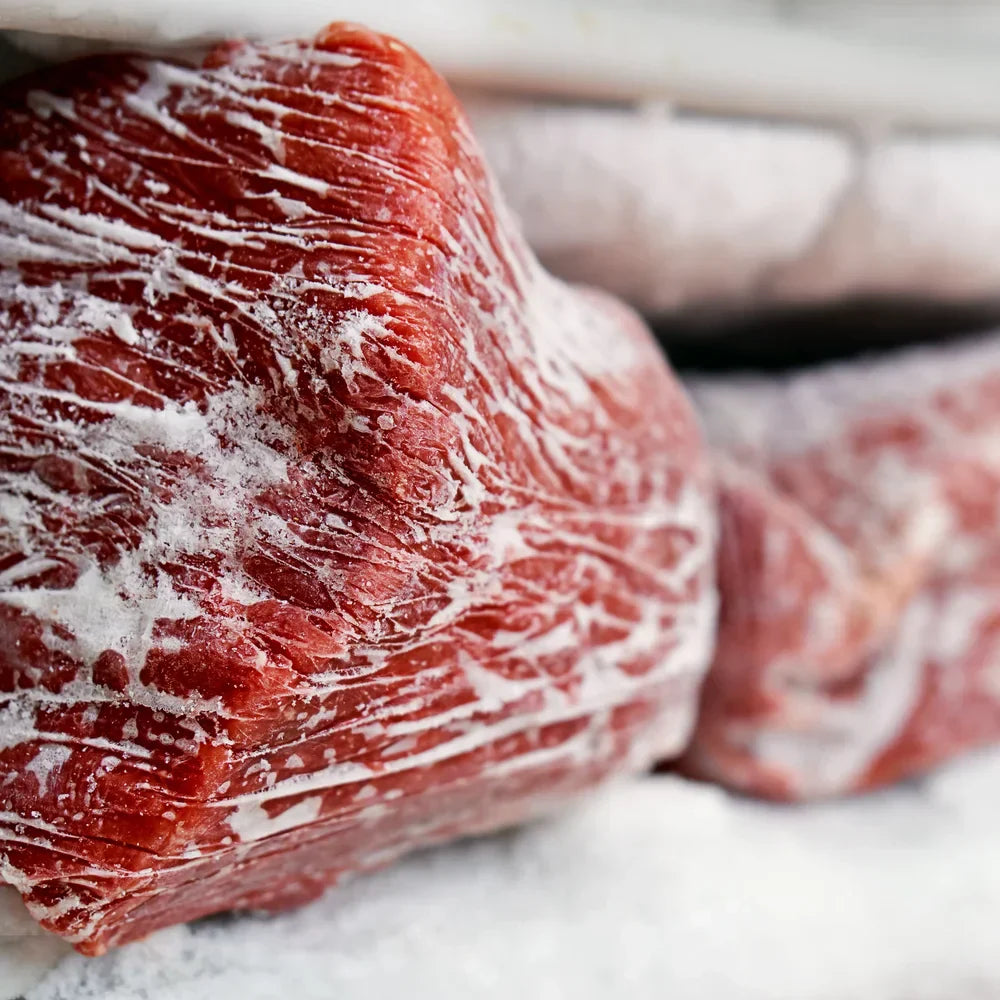
Freezing must be carried out at a constant temperature of -18°C or lower to stop bacterial activity and preserve the cell structure of the meat. Special airtight freezer bags or vacuum packaging should be used, removing as much air as possible. This prevents freezer burn, which leads to dehydration and a leathery texture.
Using a "SuperFrost" or fast-freeze function is ideal, as it prevents the formation of large ice crystals that can damage muscle tissue. Each package should be clearly labeled with the type of meat and the freezing date to allow for monitoring of storage time.
Shelf life in the freezer
The quality of frozen meat is best preserved when specific storage times are observed. At -18°C, beef can be stored for 10 to 12 months, veal for up to 12 months, and poultry for 8 to 10 months.
Lean pork typically keeps for 6 to 8 months, while fatty cuts of pork and raw sausages only keep for about 1 to 4 months due to the higher risk of fat spoilage. For quality reasons, ground meat should be used within 1 to 3 months to best preserve its flavor and texture.